
Overview
The scope of this project was to provide a remedial waterproofing solution to external deck, addressing the failure of the previously applied waterproofing system.
The deck features a block and beam construction with insulation and screed. It includes four rainwater outlets for efficient water drainage. To the perimeter of the deck a cavity parapet wall, while the rear of the deck connects to the external cavity wall of the main house.
Waterproofing failure in buried roofs and podium decks poses considerable challenges. A robust waterproofing design is essential for maintaining long-term structural integrity and ensuring optimal performance.
Essential references when designing a robust waterproofing solution for podium decks and buried roofs are BS 6229:2018 for flat roofs, BS EN 12056-3:2000 for gravity drainage systems, NHBC Chapter 7.1 2021 for flat roofs and balconies, and BS 8102:2022 for protecting below-ground structures against water ingress.
For any structure below ground, either fully or partially, waterproofing is critical for protecting and preserving structural integrity of a building.
Key considerations when specifying a waterproofing solution include movement, differential movement, drainage, expansion joints, drainage outlets, landscaping, and crucially, what lies below the deck, such as habitable spaces or car parking.
Methodology
Waterproofing design strategies need to be tailored to the unique conditions of each site. Assess the site’s requirements to determine the most effective waterproofing approach. Delta’s Technical Team attended the site to gain firsthand insights, clarify project specifics, build client relationships, assess risks, identify issues, and develop a robust solution.
The project was split into 3 phases:
- Preliminary Preparation and Surface Preparation
- Waterproofing Installation and Testing
- Drainage Protection Layer Installation and Finishes
Phase 1 – Preliminary Preparation and Surface Preparation
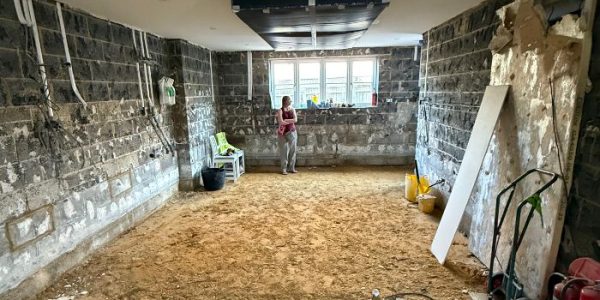
Preliminary preparations involved exposing the deck area in full. To protect a structure from rain during construction the use of temporary measures were installed to prevent rainwater trapping on the proposed waterproofing solution. Loose dirt and debris were removed, and the deck area was inspected to ensure specifications would suit. At this stage Delta’s Technical Team further checked the deck had adequate falls to discharge points, (a minimum fall of 1:80).
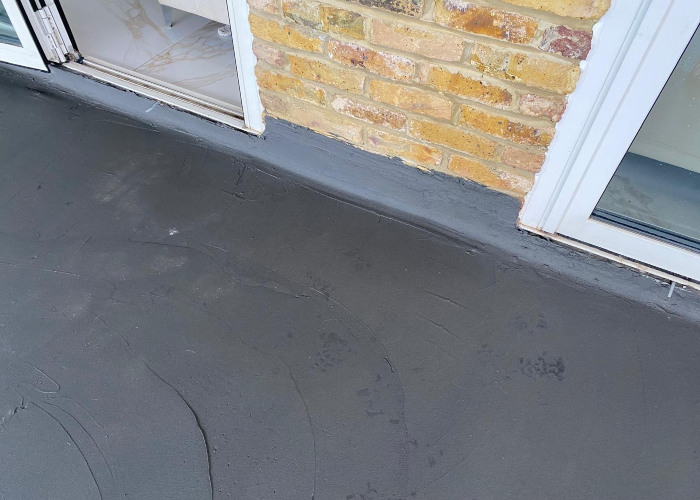
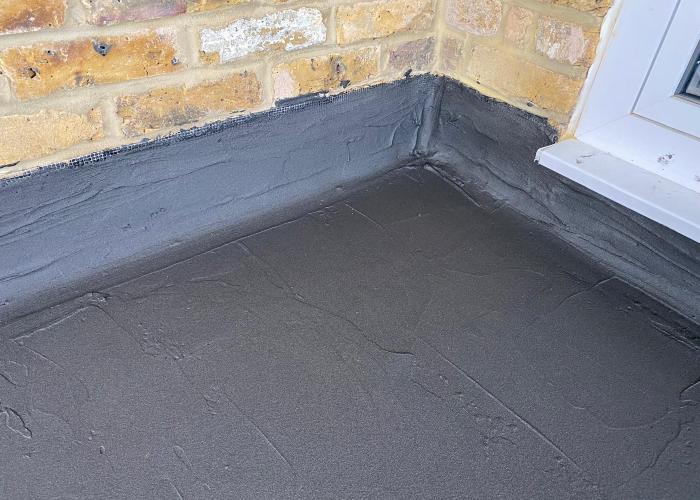
Once exposed, the existing waterproofing system underwent thorough inspection to identify defects such as air bubbles, blisters, and pinholes. Fillet detailing at wall/deck and house/deck interfaces was meticulously checked, and inadequate detailing was enhanced, with 40mm bottle cove fillets constructed using Koster Repair Mortar Plus. Blisters and air pockets were carefully addressed before sanding, and finally, a thin coating (minimum 1mm) of Koster NB 4000 was applied as a primer to the deck, parapet walls, and up to the DPC level of the house.
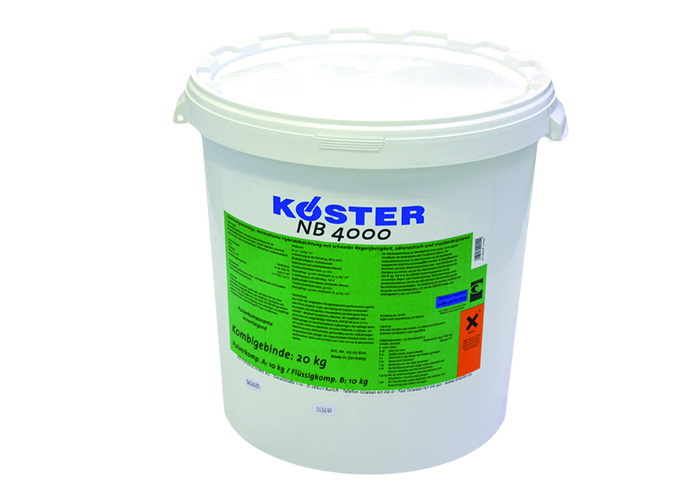
Koster NB 4000 is a hybrid product that combines the properties of a polymer modified bitumen thick film sealant and a flexible mineral waterproofing slurry. Koster NB 4000 has a high substrate tolerance; can be applied onto old bituminous or mineral waterproofing systems.
Phase 2 – Waterproofing Installation and Testing
Koster NB 4000, enhanced with the Koster NB4000 spray application additive, was applied to entire deck area and linked to DPC across the deck including the parapet wall. The application also extended into rainwater discharge outlets.
The area of application was protected from rain and frost until the product had fully cured.
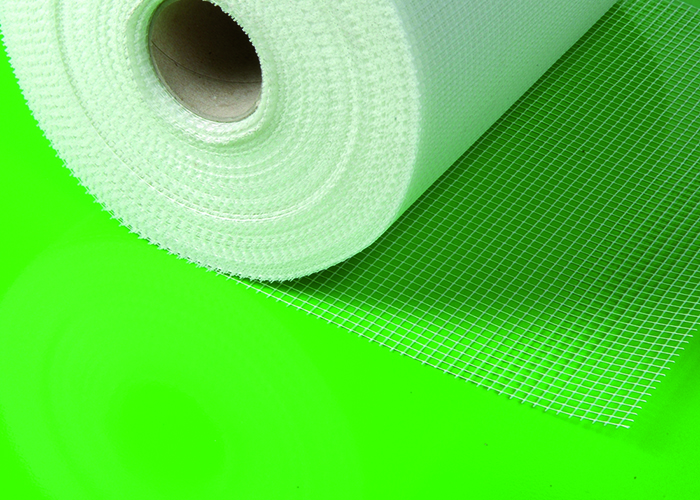
Koster Glas Fibre Mesh was installed between the primary and secondary coats, to provide additional strength and reinforcement where cracks and defects may appear during the life of the structure. Koster Glass Fibre Mesh is predominantly necessary on areas which are exposed to pressurised water, and which are in danger of cracking as well as on connections, transitions and fillets.
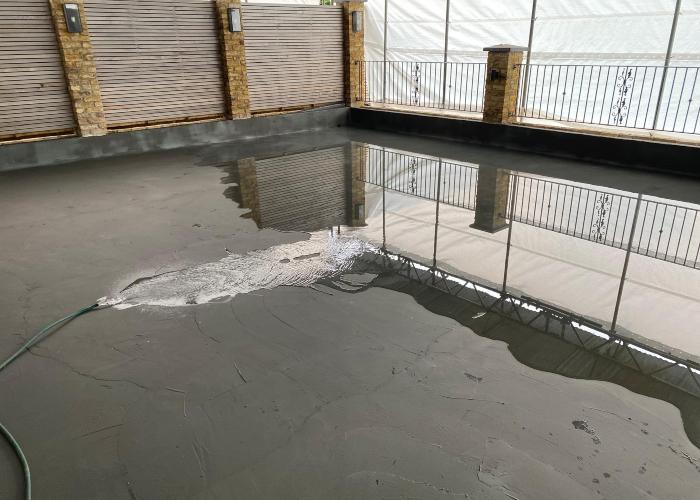
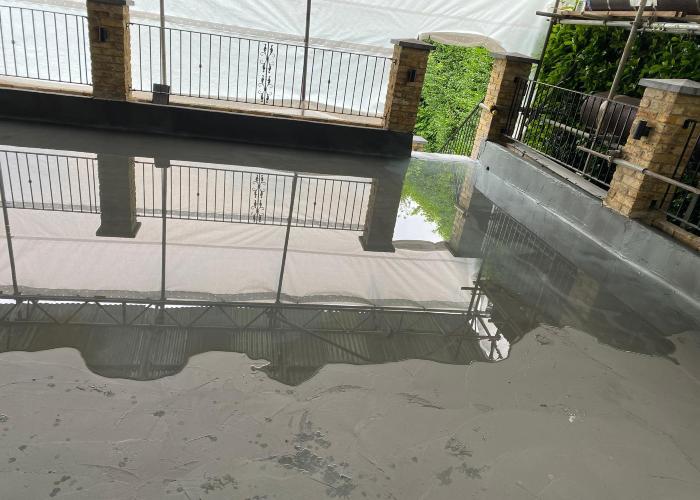
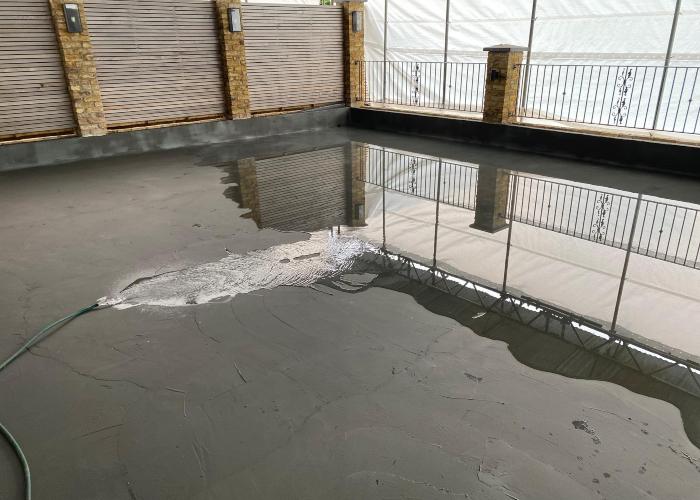
After the primary waterproofing solution (Koster NB 4000) cured, rainwater outlets from the deck were temporarily blocked, to enable flood testing. This test should ideally last at least 48 hours to ensure the waterproofing application is effective. Upon successful completion of the flood test, the water should be drained from the deck area.
Phase 3 – Drainage Protection Layer Installation and Finishes
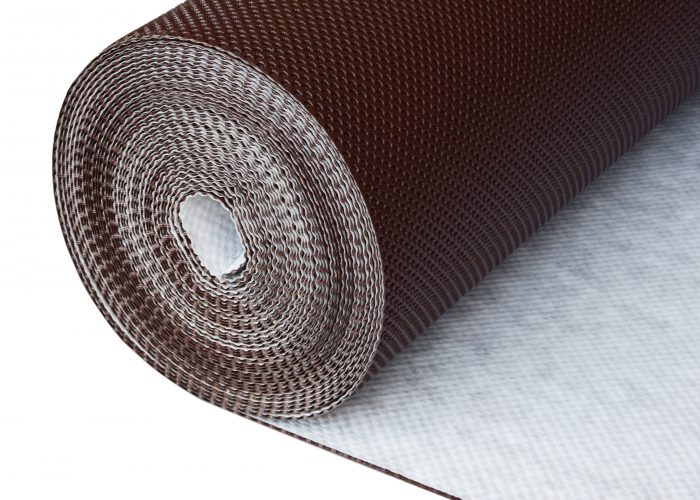
Delta MS Drain functions as a drainage layer with a fused-on hydrophilic geotextile, ensuring reliable water drainage. It has a high compressive strength of around 500kN/m² and over 8,900 dimples/m². Delta MS Drain was installed to the entire deck area as a drainage protection layer to the Koster NB 4000. Delta MS Profile was used to cap off the edges.
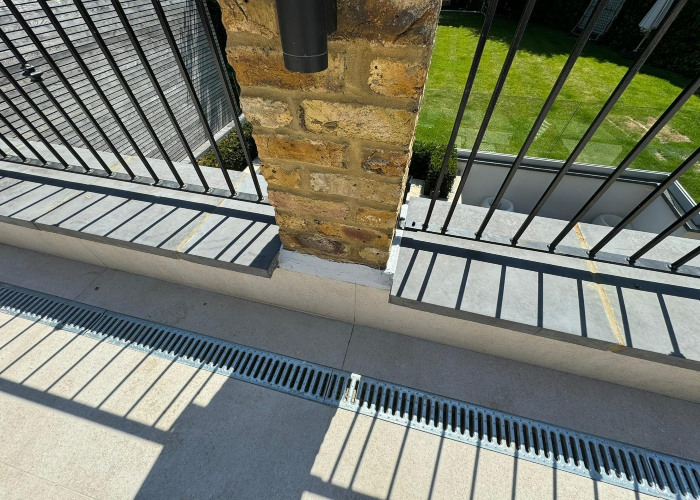
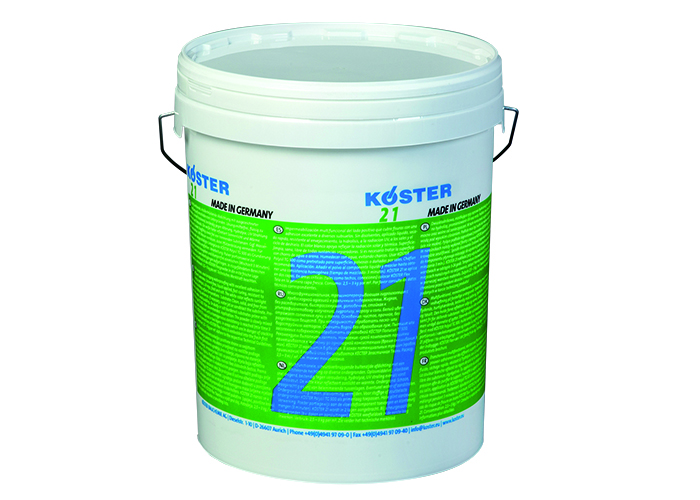
A screed mixture (3:1 sand to cement) was applied to the deck area, incorporating Koster SB Bonding Emulsion and Koster Mortar Tight. A rebate within the screed houses the . To protect against freeze/thaw cycles, a weather-proof layer of Koster 21 was applied over the screed area, extending up the parapet wall and to the DPC level on the house wall.
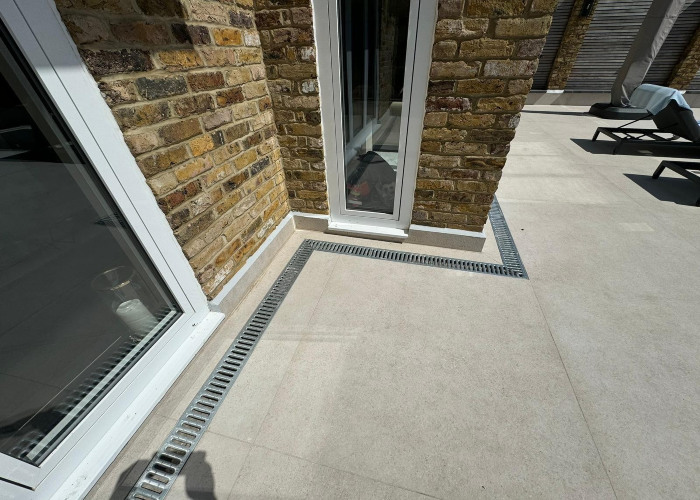
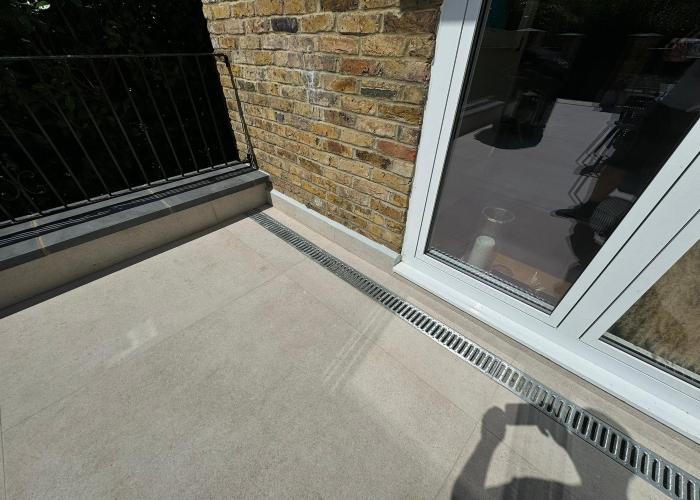
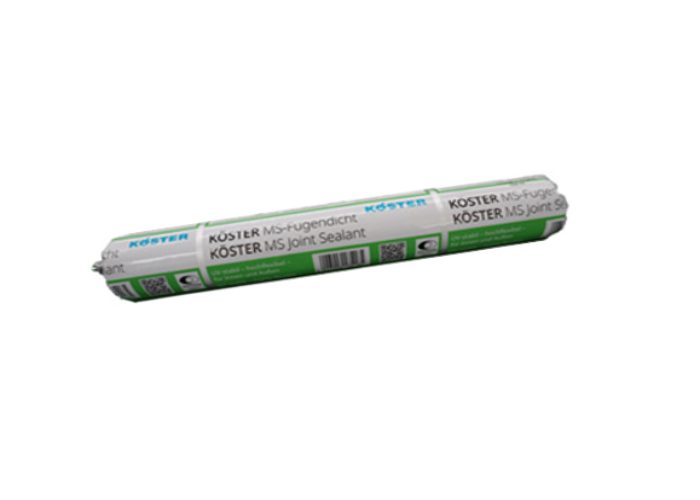
All joints within ACKO must be watertight to create a weather-proof layer. This will protect the screed below the tiled finish from freeze/thaw cycles and potential cracking or disintegration. The ACKO drain edge was sealed with Koster MS Joint Sealant to prevent water ingress.
To prevent water ingress and to seal the top of the cavity wall, Delta High Performance DPC was installed. During coping stone re-installation, Koster MS Joint Sealant was used to seal joints between the coping and house wall.
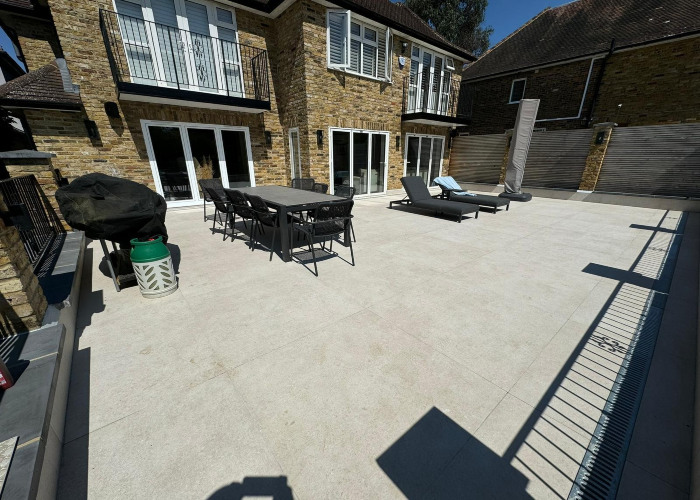
Tile edges were sealed with a 10mm bead of Koster MS Joint Sealant, a waterproof, permanently flexible sealant.
After installation, a flood test was conducted to confirm functionality.


Case Study Results
Designed and specified to perfection. Delta’s Design Team showed flexibility and commitment by being available for site visits anytime and adjusting the design as needed. The success stemmed from the partnership between the manufacturer, waterproofing designer, installer, and client. The installer embraced Delta’s technical approach, understanding design principles, products, and compliance with quality, reliability, and performance standards.
- Technical Drawings
- Downloads